While buying cooking utensils, one often compares silicone vs. nylon cooking utensils. Which one is safer? Generally, the material that does not leach harmful chemicals into food when exposed to heat is considered safe and is preferred for everyday cooking.
This article compares the silicone and nylon cookware based on several factors. Read on to choose the non-toxic option now!
What Are Silicone and Nylon Utensils Made Of?
Silicone and nylon are both common materials used in cooking utensils. Both materials differ significantly based on their composition and behavior.
Before understanding which option is safer, it is crucial to first understand what these materials are made of.
What Is Food-Grade Silicone?
The food-grade silicone is composed of a polymer of silicone and oxygen. The structure of silicone is composed of silicone-oxygen bonds. This structure differentiates it from plastic, as plastic is composed of carbon-based bonds.
The structure of silicone gives it flexibility, stability, and heat resistance. Unlike plastic, silicone is not petroleum-based and does not melt like plastic.
To be considered safe for cooking, silicone must meet food-grade standards such as the FDA and LFGB. Compliance with these standards ensures that the silicone material does not leach harmful chemicals into food when exposed to heat.
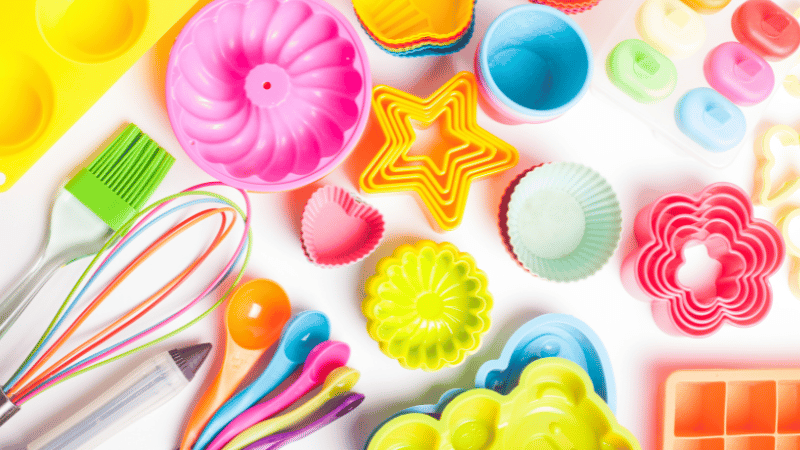
Silicone is chemically stable and non-reactive due to the strong chemical bond. Being chemically stable, it does not release harmful chemicals or odour into food and does not react with acidic or oily foods during cooking.
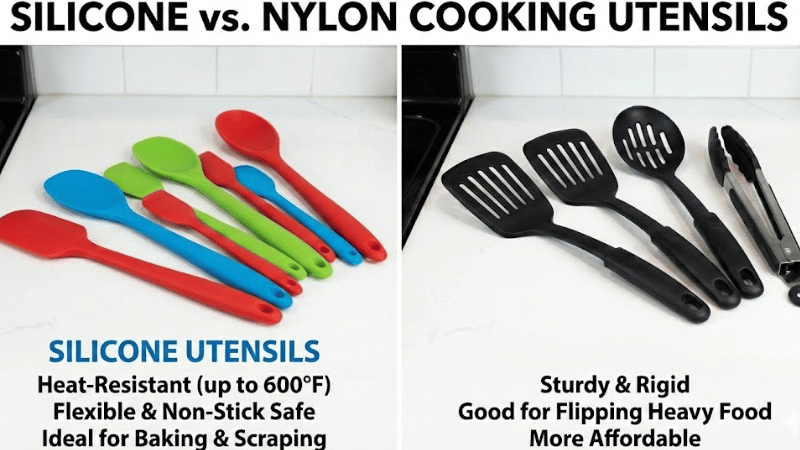
Note that non-toxic, BPA-free silicone can withstand temperatures of ~450–500 °F (232–260 °C).
What Is Nylon Material in Kitchen Utensils?
For product engineers and buyers, it is essential to understand that nylon is a thermoplastic polymer. So it softens when heated and hardens when cooled down. Nylon is derived from petroleum and belongs to the same class as many types of plastic.
However, it is made to be tougher and more resistant to heat as compared to normal plastics. The common types of nylon in nylon utensils are nylon 6 and nylon 6,6. These types are selected for their heat resistance, flexibility, and strength.
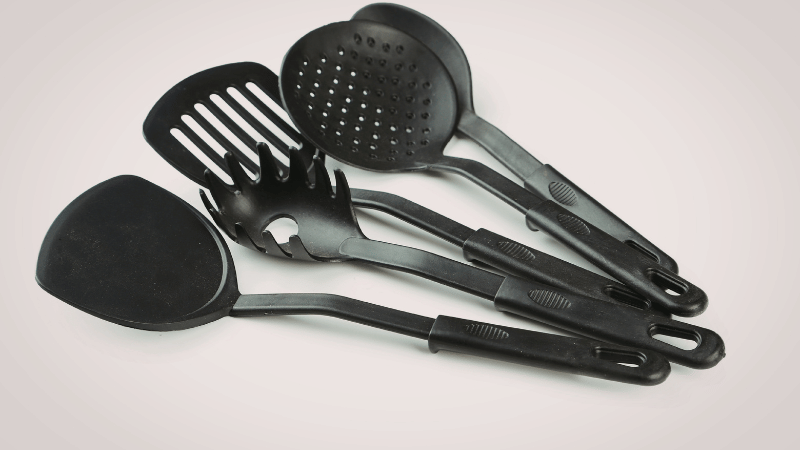
Nylon 6 and 6,6 can be moulded easily into cooking spoons, spatulas, mixing spoons, tongs, ladles, and other kitchen utensils. Manufacturers prefer nylon as it is inexpensive, not likely to break, lightweight, and durable.
Additionally, it is easy to mass-produce, making it a further popular option for use in cooking utensils. Despite all the advantages, nylon does have some heat limitations. Being thermoplastic, nylon can soften when exposed to high temperatures.
So the answer to the question of are nylon utensils safe? is that they are safe but only within a certain temperature range.
It is important to note that nylon utensils are generally safe up to a temperature of around 400 °F (about 204 °C); above this limit, the nylon utensils can warp or melt, which may increase the risk of releasing chemicals or particles that could affect health.
Which Handles High Cooking Temperatures Better?
Daily cooking involves contact with hot pans, oils, and the oven. Thus, resistance to heat is an important factor to consider when choosing cooking utensils.
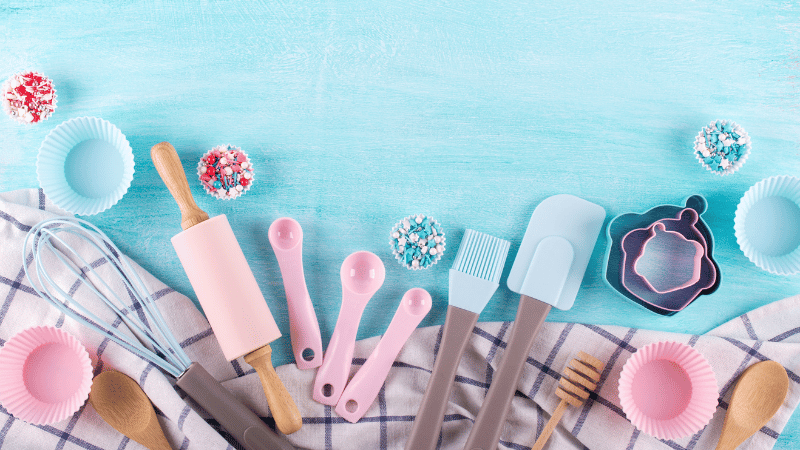
How Hot Can Silicone Cooking Utensils Get?
The food-grade silicone is generally designed to tolerate temperatures between 230 and 260 degrees Celsius. Some advanced silicone products can even beat higher short-term heat exposure.
When exposed to high temperatures, silicone does not typically melt, warp, or soften like thermoplastics. In fact, its molecular structure remains stable, and it maintains its shape and functions.
Owing to their heat tolerance, silicone cookware is ideal for high-heat cooking tasks such as deep-frying, pan-frying, and baking, making silicone a reliable option for both stove and oven cooking environments.
How Heat-Safe Are Nylon Cooking Utensils?
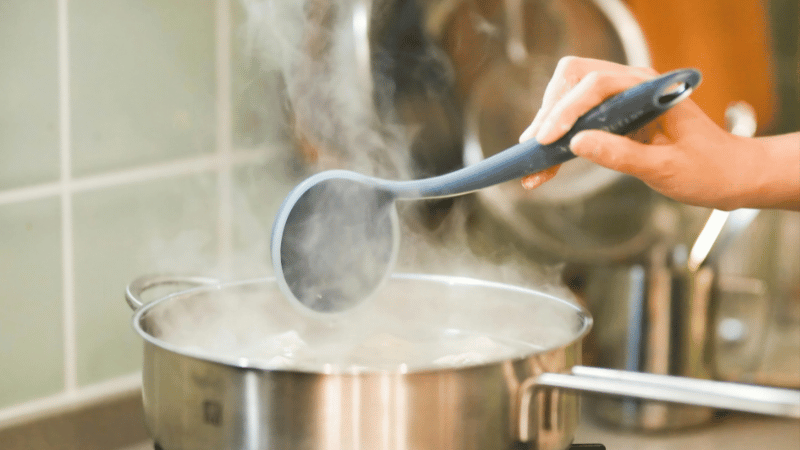
Nylon cooking utensils can generally tolerate very high temperatures ranging from about 180 to 200 degrees Celsius. The higher melting point makes nylon cooking utensils perfect for low to medium-heat cooking needs, such as stirring soup or sauteing vegetables at controlled temperatures.
When nylon is exposed to temperatures beyond this limit, it may soften, bend, or deform, hence lose its original shape. Prolonged exposure to heat may cause discoloration of nylon utensils.
It is crucial to note that visible damage is not the only safety concern. Overheated nylon may lead to material degradation, affecting the performance and safety.
Heat Resistance Summary
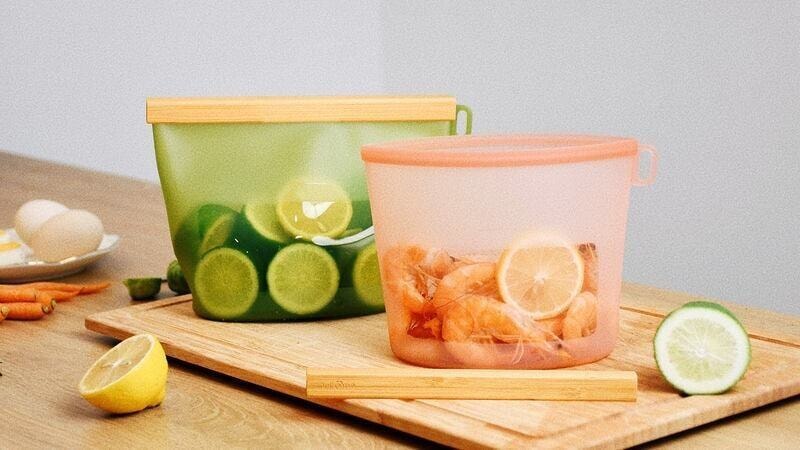
When taking from the perspective of heat resistance, silicone utensils clearly beat nylon in high-temperature cooking. Food-grade silicone can tolerate temperatures around 200-230 degrees Celsius without melting or softening.
While nylon utensils can bear temperatures of around 180-200 degrees Celsius before they experience deformation. For hot cooking methods such as frying, stir-frying, and high-heat baking, silicone is a safe and reliable choice. As compared to wooden spoons, nylon is ideal for lower-temperature cooking tasks.
Is Silicone or Nylon Toxic When Cooking?
Understanding if the utensils will release chemicals when they come in direct contact with hot food is as important as undertanding the heat resistance of the material.
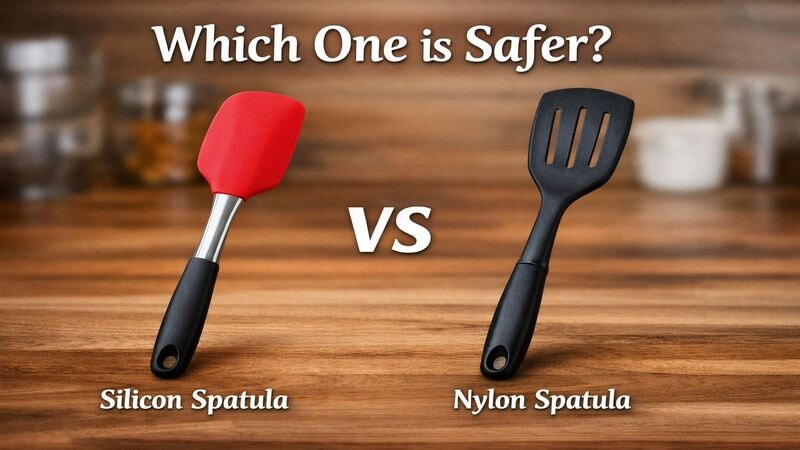
Is Food-Grade Silicone Non-Toxic?
Food-grade silicone utensils are considered chemically inert. This means it does not react with food or leach chemicals during cooking. Its stable silicon-oxygen bond makes it resistant to breakdown under normal kitchen temperatures.
High-quality food-grade silicone is made of durable material, is BPA-free and plasticiser-free. Thus reducing the risk of chemical leaching into food even when exposed to heat, oils, or acidic foods. The higher heat resistance is the main reason why silicone is commonly used in bakeware and baby products.
Is Nylon Safe to Cook With?
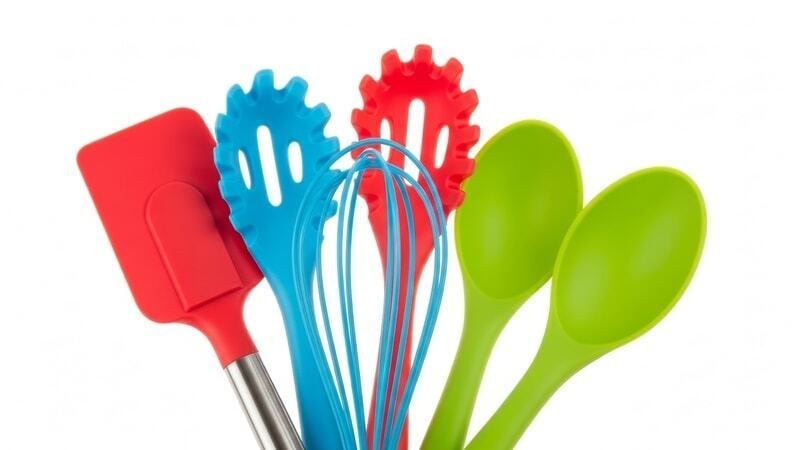
The question is nylon safe to cook with is a commonly asked one. To answer this question, we can say that nylon utensils are safe to cook with, but only within their recommended temperature limits.
However, potential risks arise when nylon is overheated. Excessive heat can degrade the material, which may increase the chance of harmful chemicals leaching into food. When talking about nylon utensil safety, one common question that arises is Are nylon spatulas safe?
The simple answer to this question is that yes, nylon spatulas are safe, but only when used correctly. They should be kept away from fire and open flames, and should only be used for gentle cooking tasks.
Silicone vs. Nylon — Chemical Safety Comparison
Chemical security of materials helps in answering the question of which is safer nylon or silicone cooking utensils, easily. Food-grade silicone utensils remain chemically stable at higher temperatures. Whereas nylon begins to soften and degrade as it reaches the extreme heat limit.
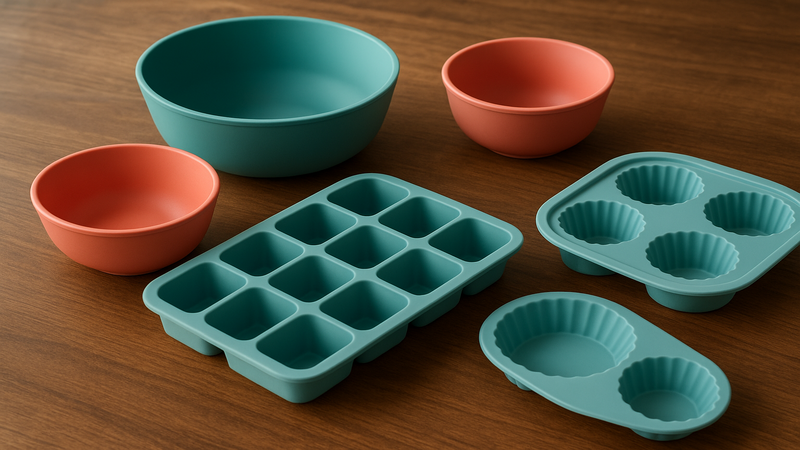
Because of this difference, silicon does not pose long-term health risks. In short, proper use conditions matter for both materials.
Which Cooking Utensil Performs Better in Real-Life Use?
Apart from safety, some other factors like how utensils feel in hand, how they interact with cookware, and handle demanding tasks influence the cooking experience.
Performance on Non-Stick Cookware
Both silicone and nylon cookware are designed to be gentle on non-stick surfaces, but they behave differently. Silicon is soft, and its flexible texture provides excellent surface protection, reducing the risk of scratches even when used frequently. Nylon is scratch-resistant, but it is firmer than silicone.
This means nylon utensils cannot handle excessive pressure as much as silicone utensils. When comparing nylon vs silicone spatula in terms of food handling, we can say that silicone’s flexibility allows it to scrape bowls and pans effectively.
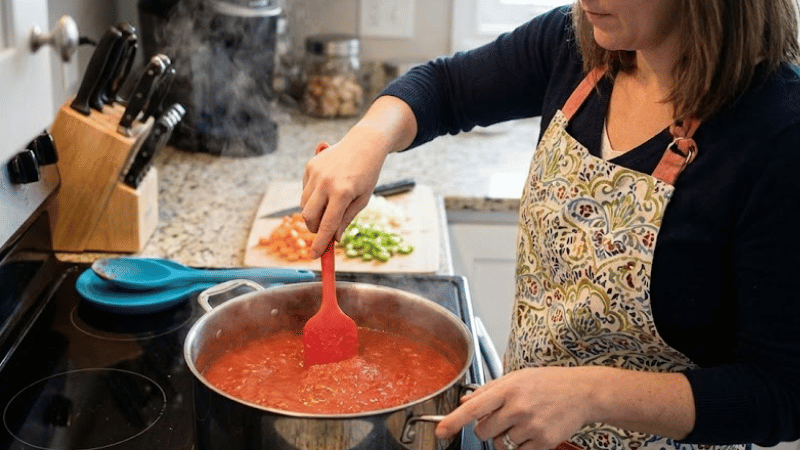
Cooking Scenarios: Stir-Frying, Baking, and High-Heat Cooking
Silicone rubber performs better in high-heat situations, like in stir-frying, baking, and frying. Silicone maintains its shape and safety features even at high temperatures. Nylon, however, is only suitable for low to medium heat and softens during intense cooking sessions.
Many professionals prefer silicone cooking utensils for high-heat cooking due to their durability, safety features, and consistent performance under pressure.
Comfort, Grip, and Cleaning
In terms of comfort, grip, and cleaning, silicone cooking utensils are:
- More comfortable
- Offer a non-slip grip
- Have better flexibility
- Offer reduced hand fatigue during long cooking sessions
- Easy to clean as residue does not stick to their surface
- Resist odor and staining
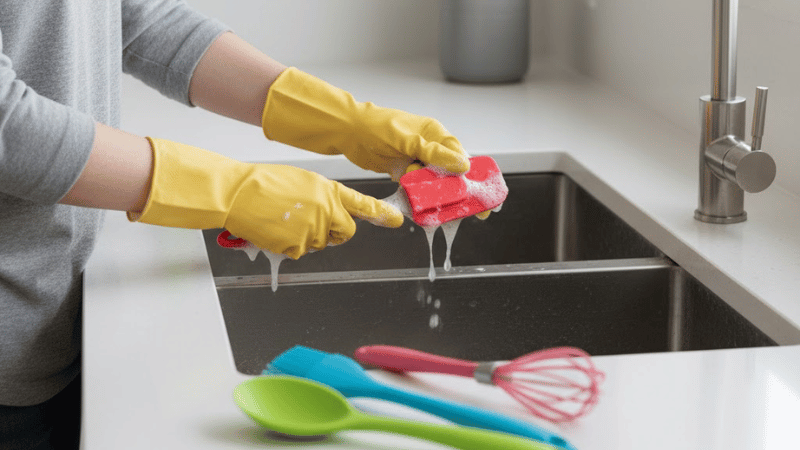
Nylon utensils, on the other hand, absorb smells and discolor over time. Additionally, nylon is lightweight but stiffer as compared to silicone
Durability and Lifespan — Which Lasts Longer?
When comparing from the perspective of durability, we can say that:
1.Silicone resists cracking and aging, whereas nylon may bend, warp, or become brittle as it ages.
2. Silicone can tolerate continuous exposure without degradation. However, nylon utensils can wear and break down when exposed to high temperatures.
3. With proper use, high-quality silicone cooking utensils can last for years, whereas nylon utensils need to be replaced upon noticing signs of wear.
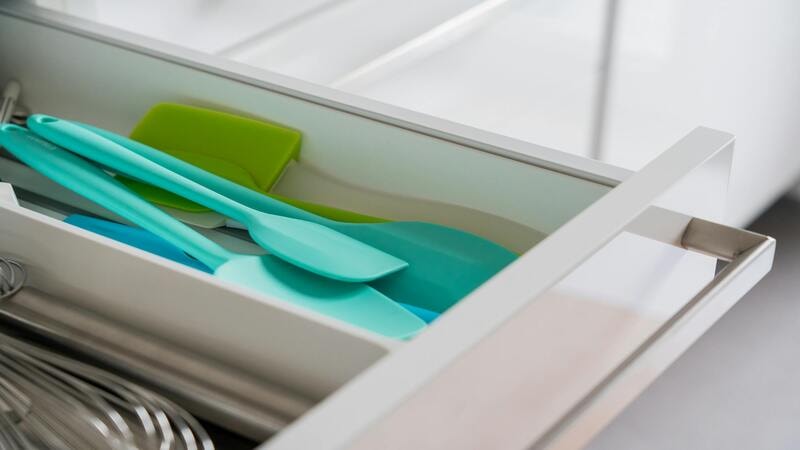
Silicone vs Nylon Cooking Utensils — Quick Comparison Table
A table comparing silicone vs nylon kitchen tools based on different factors is given below. Read it to choose the one that is as per your requirements.
| Feature | Silicone | Nylon |
|---|---|---|
| Heat Resistance | 230–260°C | 180–200°C |
| Chemical Safety | Inert, bpa free | Safe if not overheated |
| Flexibility | Highly Flexible | Moderate |
| Best Use | High-heat cooking | Low/medium-heat cooking |
| Durability | Long | Shorter |
Conclusion
To sum up, we can say that silicone cooking utensils can bear extreme temperatures from 230-260°C, making them ideal for high-heat cooking applications. Nylon utensils, on the other hand, can tolerate a temperature range from 180-200°C. Thus, they are ideal for mid/low-heat cooking.
Both the nylon and silicone cooking utensils are safe, but within their recommended temperature range. No matter whether you are choosing nylon or silicone cooking utensils, always make sure to choose a reliable supplier, such as Hongju Silicone.
Invest In High-Quality Silicone Rubber Products – Contact Hongju Now
Hongju Silicone is your trusted partner for all silicone rubber products. With our 20 years of design and production experience, there is no way we will fail to meet your needs. Our experienced staff can get a prototype ready within 3-5 working days with CNC machining, making us better than our competitors.
Just contact us today, and get a bulk quote now.
FAQs
1. Which is more heat-resistant, silicone or nylon cooking utensils?
Silicone is more heat-resistant, typically withstanding temperatures up to 450°F (232°C), while nylon utensils are usually limited to around 400°F (204°C), making silicone the better option for high-heat cooking.
2. Are silicone or nylon utensils safer for non-stick cookware?
Silicone utensils are generally safer for non-stick cookware, as they are soft and won’t scratch or damage the coating, while nylon can sometimes cause minor damage if used roughly.
3. Can you support OEM & ODM projects with custom requirements?
Yes. Hongju Silicone offers full OEM & ODM services, from design assistance to mass production, helping you turn ideas into market-ready products efficiently.
Q4: Do you require a high minimum order quantity?
No. Hongju Silicone supports low MOQ orders, allowing you to test the market or develop new products with lower risk and greater flexibility.